Automated Pallet Inspection Separates the Good from the Bad

Warehouse logistics increasingly rely on automation in the form of autonomous mobile robots (AMRs), scanners, complex conveyors, and fleet management systems for seamless operation, but it’s the ubiquitous, century-old pallet that remains the critical support system. Make no mistake, if even one of those thousands of pallets is defective, it can create havoc in the warehouse.
When it comes to pallets, Swedish cooperative food retailer COOP is one organization that knows them all too well. COOP operates some 800 stores throughout the country and recently commissioned a state-of-the-art, fully automated logistics center that processes thousands of items daily. Pallets of goods are shipped in and out of the Automated Logistics Centre in Kjula, Eskilstuna, Sweden, on a 600-meter electric train and processed throughout the facility via an array of specialized material handlers, AMR shuttles, and robotics with a focus on efficiency, ergonomics, and safety for warehouse personnel.
Pallet inspection is a significant part of the operation to ensure worker and product safety. During inspection, the facility evaluates pallets for broken boards and slats, loose/protruding nails and fasteners, rot/decay, and debris or contamination. The pallets are also lifted and checked for stability to confirm they won’t fail under a load. The inspection task is further complicated by the fact that some pallets are wood and some are plastic. Once inspected, pallets get sorted and stacked appropriately.
Manual pallet inspections are time-consuming, physical, and difficult. Lifting, rotating, examining and sorting 30- to 70-pound pallets all day is somewhat of an undesirable job, and COOP warehouse team members found the task tedious. By the end of the workday, employee precision, speed and accuracy significantly diminished due to manual exertion.
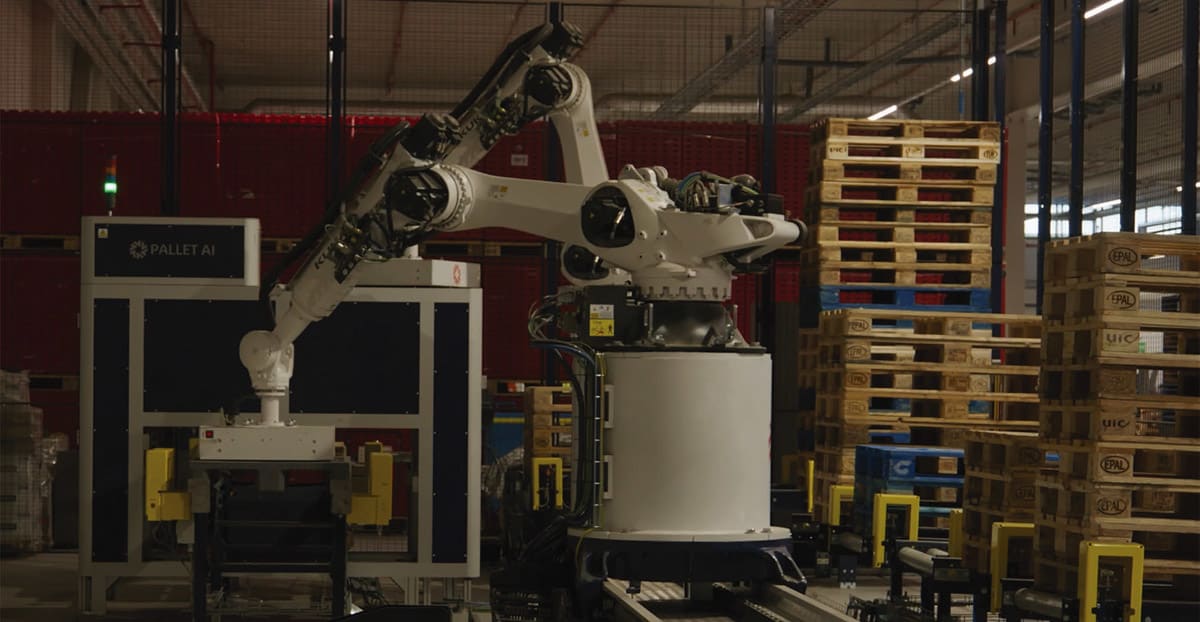
To make pallet inspecting easier and more efficient, COOP automated the process with industrial robots from KUKA Robotics and an advanced pallet inspection system powered by artificial intelligence (AI) from KUKA System Partner IVISYS called PALLETAI.
The heavy lifting is performed by KR QUANTEC-2 6-axis industrial robots that can quickly lift and manipulate pallets to the inspection cells, place them on material handlers then lift and place them for storage and reuse. The QUANTEC family of robots provides a range of payloads from 120 kg to 300 kg and reaches from 2,700 mm to 3,900 mm. The robot moves to its target point with an accuracy of ±0.061 mm in just seconds. KR QUANTEC robots are easily commissioned, optimized, and maintained while providing a small footprint for cell planning and operation.
KR QUANTEC-2 robots also feature digital motion modes/software add-ons that allow users like COOP to select the optimal robot motion for their specific applications. “Path mode,” for example, provides greater accuracy and precision while “dynamic mode” increases speed and reduces cycle times. These technology enhancements allow for maximum versatility and flexibility as applications change.
With a pallet capacity of up to 400 pallets per hour, PALLETAI is a modular, scalable out-of-the box inspection system that scans pallets and generates real-time data that assesses compliance with user-defined quality standards.
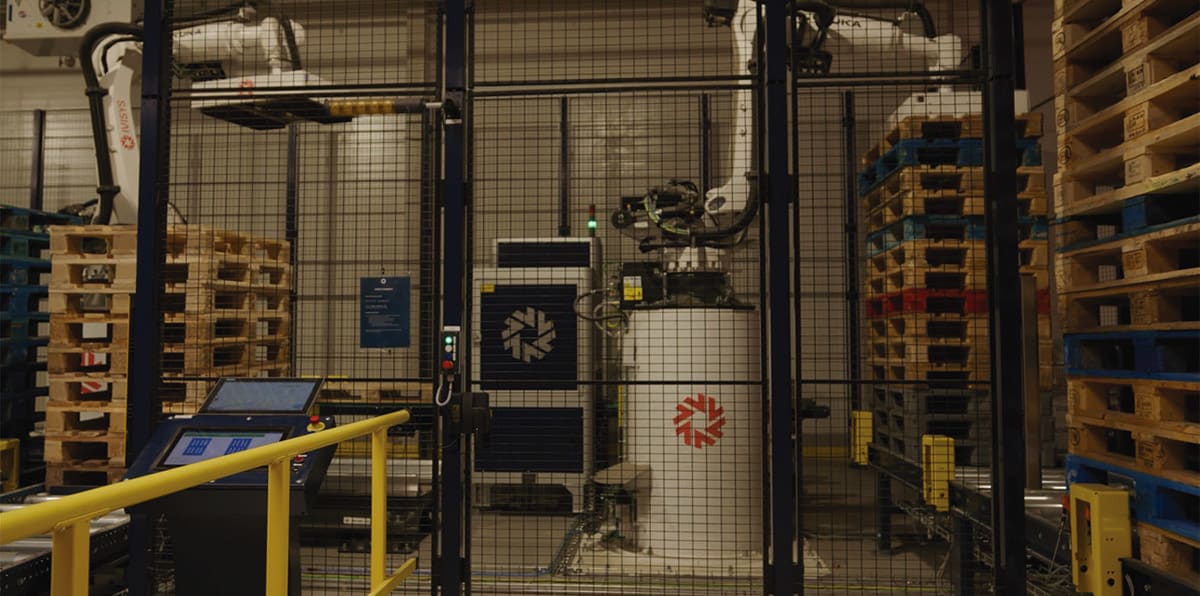
After the KR QUANTEC places pallets on a conveyor, they pass through the PALLETAI that takes high-resolution scans that are then routed to 26 deep neural networks that provide real-time data to COOP regarding pallet quality. The PALLETAI system evaluates every detail of the pallet to detect cracks and holes, part and component segmentation and pattern evaluation to detect mold, discoloration, and other subtle defects.
Once the evaluation is complete, a KR QUANTEC sorts the pallets, placing them in the appropriate stack. The robotic IVISYS pallet inspection system, the PALLETAI, ensures that defective pallets are not returned to the normal flow of COOP’s automated warehouse operations, which could be severely disrupted by an imperfect pallet.
In addition to reducing costs related to human sorting and increasing inspection and sorting capacity up to fivefold, the system tracks which suppliers are delivering goods on pallets of lesser quality.
In terms of efficiency, KUKA’s robots and PALLETAI pick, place, and scan pallets nonstop around the clock. More pallets are being inspected than ever before, and classification accuracy is markedly improved by the AI scanning and scoring system, putting an increased number of high-quality pallets back into the system for reuse. Even more importantly, COOP team members report that sick leave requests at the pallet inspection station have been dramatically reduced since introducing the automated system, something leadership at the facility is particularly proud of.
As one of Europe’s largest, fully automated warehouses, the COOP facility combines workers, robots, and AI-powered systems into a synergistic system that improves process outcomes and efficiencies along with working conditions and job satisfaction. Now, instead of struggling to maintain a cadre of pallet inspectors to perform a tiring and tedious job, the COOP facility is upscaling and upskilling its workforce to monitor, maintain, and control a fully automated operation. Instead of manually inspecting and stacking pallets, workers are now training and learning about automation and robotics, and COOP is developing new specialists and professionals for the future.
This article was contributed by KUKA (Augsburg, Germany). For more info, visit here .
link